Scoliosis: Does Curve Severity Really Matter?
Does severe scoliosis mean more pain? Does a mild curve mean fewer problems?
The answer to both is no.
Many people assume the size of a scoliosis curve determines how much pain or limitation someone experiences. But scoliosis is far more complex than that. Two people with nearly identical curves can have completely different experiences. So before we talk about what helps, let’s talk about what’s actually going on.
What all scoliosis curves have in common
No matter the shape, size, or location of your curve, certain things are true for everyone with scoliosis.
Anatomically:
- Scoliosis curves don’t move much — they’re relatively fixed
- The zones between curves tend to move the most
- All curves involve rotation and torsion
- Pain and functional limitations can appear anywhere in the body, not just at the curve
In daily life:
- Bags and purses slide off one shoulder
- Clothing twists on the body
- One arm reaches higher than the other
- The neck turns more easily in one direction
- Only one side of the back fully rests against a chair
All of this points to one truth: when you move, your scoliosis moves with you.
Your curve shapes how your hips sit in their sockets, how your legs swing when you walk, how your feet meet the ground, how your back feels against a car seat, how easily you can turn to check a blind spot. These aren’t dramatic limitations — they’re the texture of daily life with scoliosis, and they’re largely the same whether your curve is 20 degrees or 60.
So does severity matter?
Sometimes — but probably less than you think.
There are cases where a more severe curve creates real health concerns. Respiratory and cardiac function can be affected by significant thoracic curves. Digestive issues are more common with larger lumbar curves. These things are worth knowing and worth monitoring.
But for most people, most of the time, degree of curve doesn’t seem to be what drives pain or limitation. What does seem to matter is how much you use your body. Our most active clients tend to report more functional challenges and discomfort. Our most sedentary clients report problems of being, well, static. Pain can, and frequently, does occur as a result of lack of blood flow. Movement is crucial— regardless of curve size. So there isn’t an argument here for doing nothing or for over-doing it. It’s an argument for doing something (anything) and preparation: move as much as you like, and learn to take care of yourself before and after.
An asymmetrical spine that’s navigating movement all day will eventually encounter positions it can’t easily accommodate. That’s not a reason to stop. It’s a reason to understand your body better.
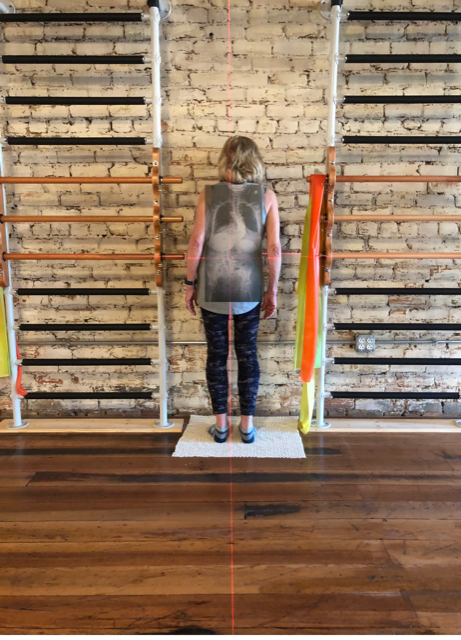
How different curves affect the body
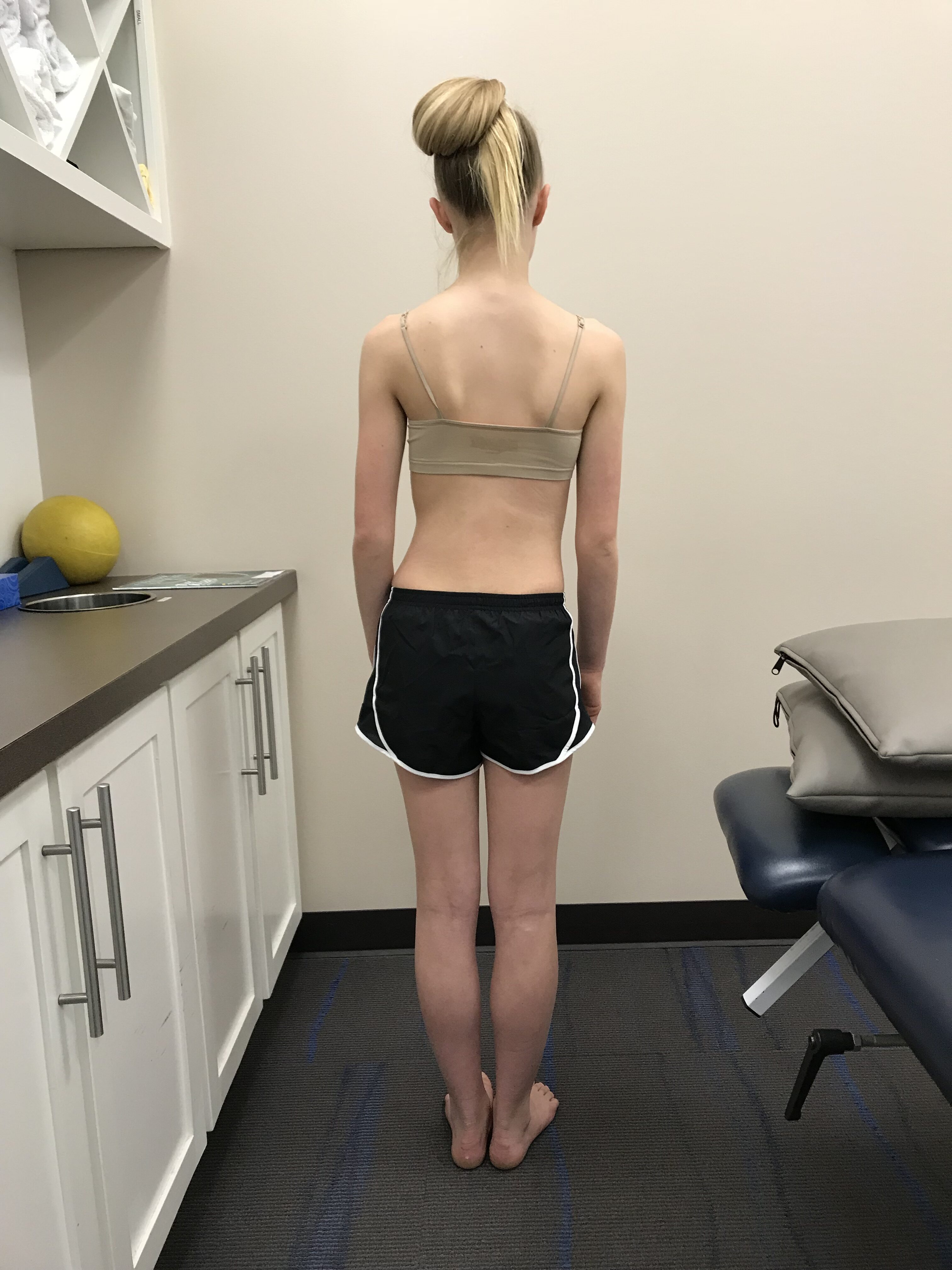
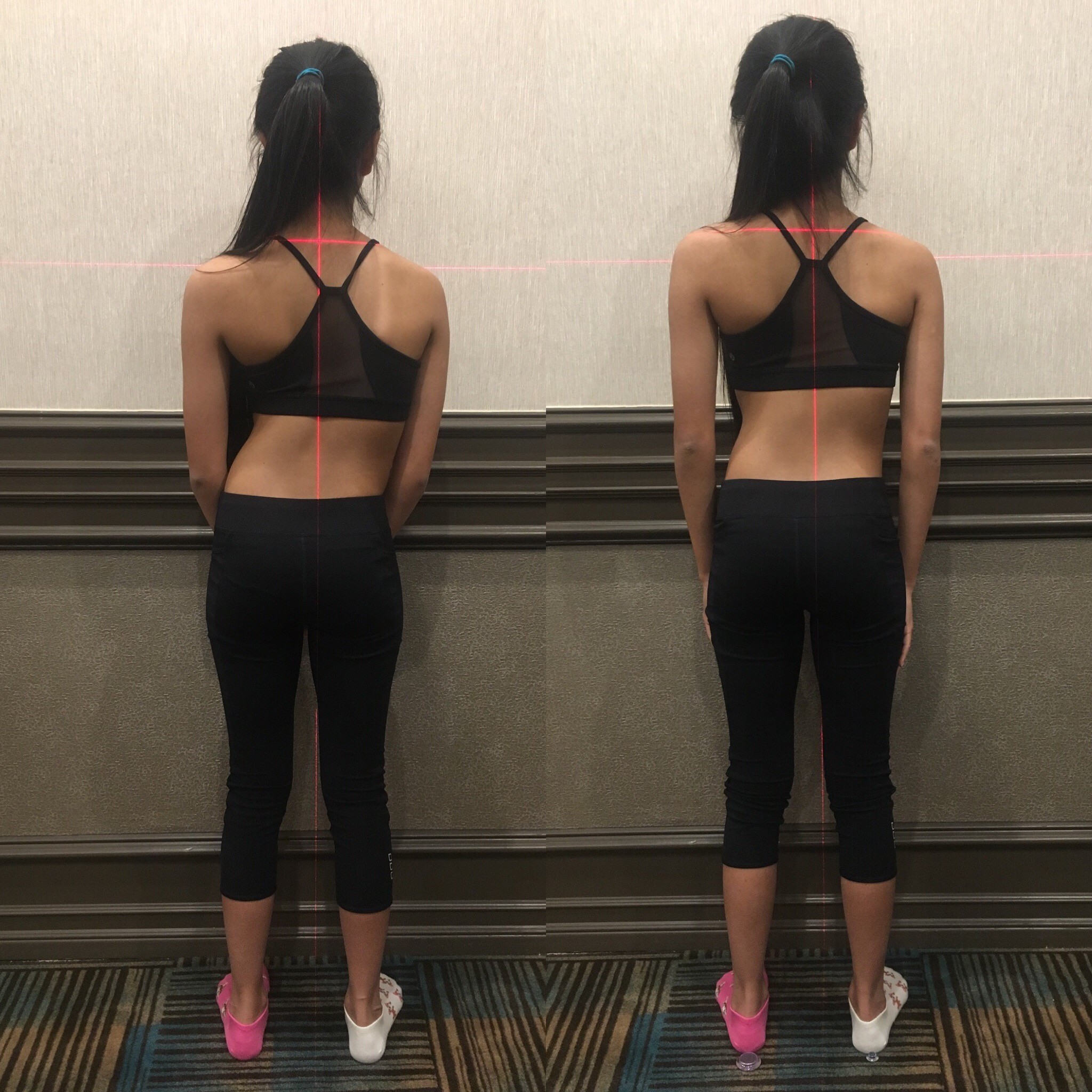
While all scoliosis shares common ground, different curve locations do create different patterns.
Thoracic curve (upper and mid-back)
More commonly associated with:
- Neck and shoulder pain
- TMJ discomfort
- Rib prominence discomfort during forward-leaning positions — cooking, working at a computer, gardening — especially when held for too long
- Respiratory and cardiac concerns, which increase with curve severity
Lumbar or thoracolumbar curve (lower back)
More commonly associated with:
- Hip and sacroiliac (SI) joint pain
- Hip flexor tightness
- Low back pain
- Incontinence
- Discomfort when walking uphill or holding a forward-leaning position
- Digestive concerns, which also increase with curve severity
What actually helps
Start here: just move. Find something that doesn’t hurt and do it. It doesn’t have to be scoliosis-specific. It doesn’t have to be perfect. Movement is the foundation.
From there, every body with scoliosis benefits from the same three things — elongation, breathing, and strengthening. Creating length, supporting rib cage mobility, building support around the asymmetry. These aren’t advanced concepts. They’re the starting point.
As you progress, the work gets more specific. Thoracic curves call for attention to the upper spine, ribs, neck, and shoulders. Lumbar curves need focus on the pelvis, hips, and lower body alignment. A structured program helps — not because you can’t figure it out on your own, but because having a clear path forward makes it easier to actually follow through.
If you haven’t yet, try two free weeks of our On Demand program. Look for the week-by-week structure. It’s designed to meet you where you are.
On taking care of yourself
If you’re not caring for your body the way you want to, I’d invite you to ask yourself — without judgment — why.
Not “I’m lazy.” That’s a conclusion, not an answer, and it’s not a kind one. Maybe you’re tired. Maybe the entry point feels too high. Maybe no one has made it feel possible. Ask what’s actually true, and ask what might make it easier.
Be curious about yourself rather than condemning.
I still carry the words of a friend who died far too young. She said, “I wish I had been kinder to myself.”
Be that. Do that. Everything else grows from there.