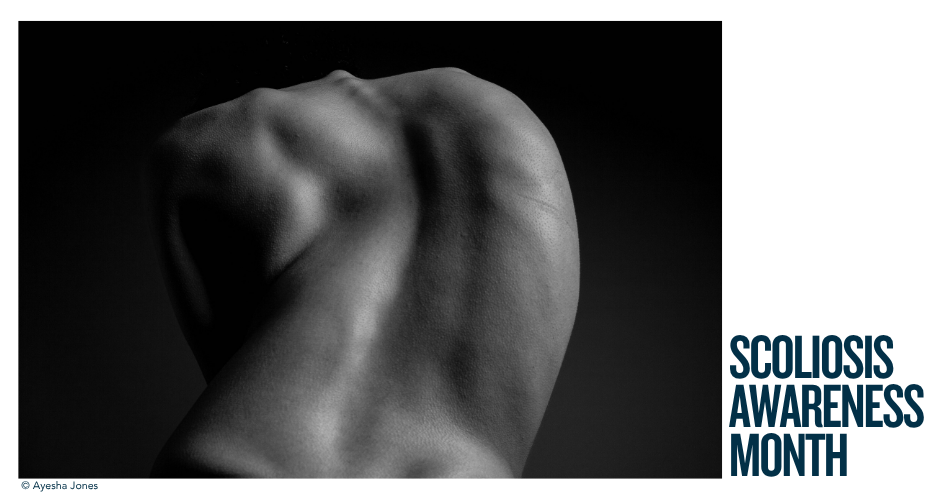
June is Scoliosis Awareness Month
Scoliosis doesn’t respect borders. It has appeared in the art of ancient Egypt, the literature of modern America, the studios of contemporary photographers in Iran, Canada, and the galleries and institutions of the UK. For scoliosis awareness month, we’re taking a global tour, not through X-rays and Cobb angles, but through the stories, images, and artistic expressions that have captured the curved spine across cultures and centuries. Because curves, in all their complexity, have always been part of the human story.
Visual Art & Sculpture: The Curved Spine Through History
Long before there was a clinical name for it, artists were depicting the curved spine. These works, from ancient tombs to Renaissance masterpieces offer us a window into how different cultures saw, interpreted, and sometimes humanized spinal difference.
Ancient Egypt: Spinal Curves in the Tomb Paintings
Some of the earliest known depictions of spinal deformity come from the Old Kingdom tombs of ancient Egypt. In the tomb of Ti at Saqqara, a dog handler is depicted with what appears to be kypho-scoliosis, his right shoulder visibly higher than his left, his body curved as he goes about his daily work. Other tomb scenes from Giza show herdsmen and workers with rounded backs, carefully rendered by artists who clearly observed and recorded the full range of human form among the people around them.
These weren’t hidden figures or objects of pity, they were shown as part of ordinary life, laboring alongside everyone else. There’s something quietly remarkable about that.
The Venus de Milo: Beauty and Asymmetry
One of the most debated questions in art history is whether the Venus de Milo, perhaps the world’s most celebrated sculpture, depicts a woman with a spinal deformity. Sculpted between 150 and 50 BC and believed to represent Aphrodite, the Greek goddess of love, the statue has long been analyzed by anatomists as well as art historians.
In 1886, German anatomist Philipp von Henke observed that the pelvis of the Venus is obliquely positioned and that her legs appear to be different lengths, findings that led him and others to suggest the model may have had a subtle spinal curve. The midline of the statue’s face is also slightly displaced. Most modern studies have concluded that if a deformity was present, it was mild. But the conversation itself is significant: what has long been held up as the universal symbol of beauty may carry within it the hallmarks of asymmetry, a quiet reminder that beauty and difference are not opposites.

Renaissance Italy: The Duke of Urbino
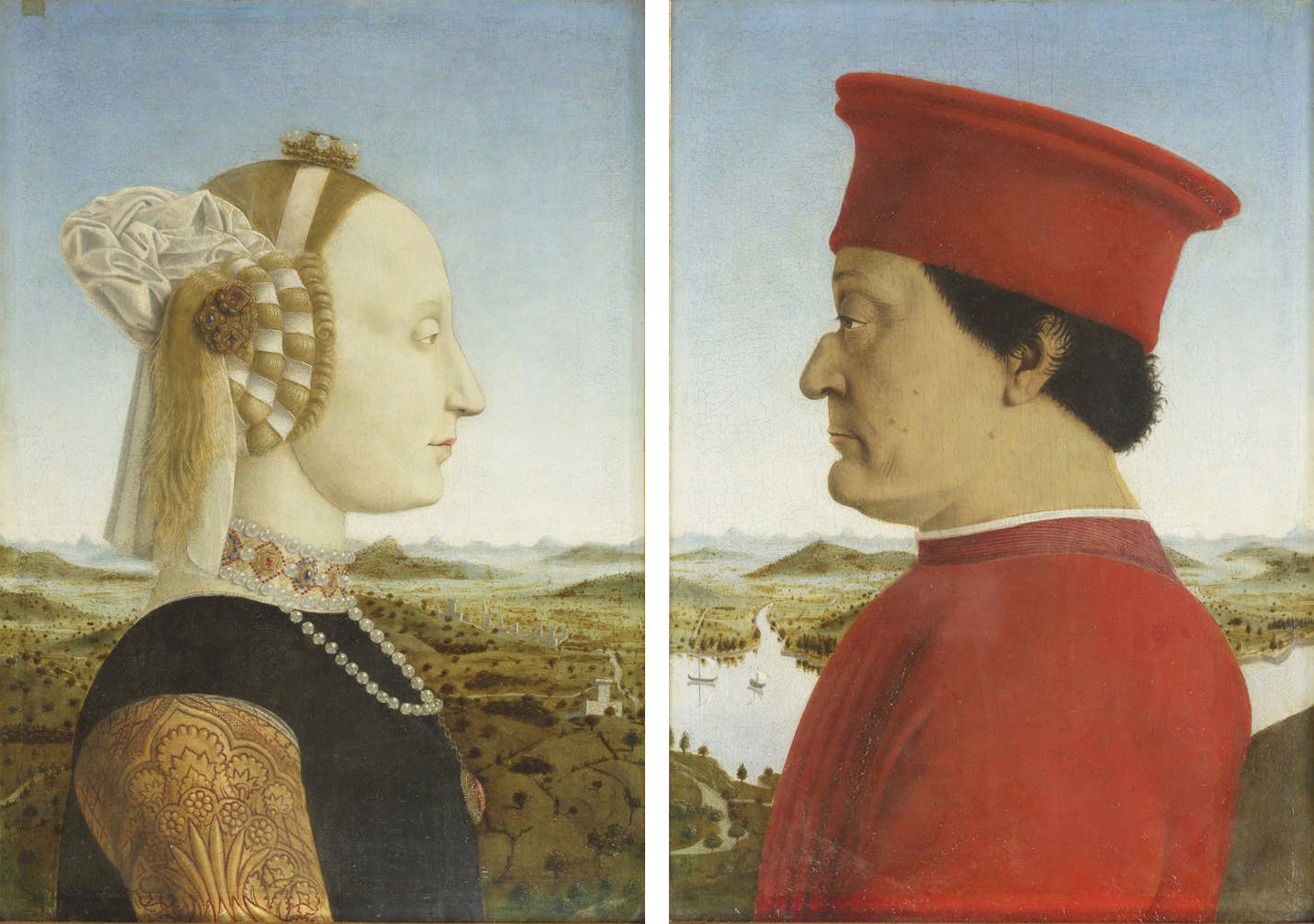
In 1465, Piero della Francesca painted the famous diptych portrait of Federico da Montefeltro, Duke of Urbino. What draws the clinical eye is the Duke’s prominent thoracic kyphosis, clearly visible in both this painting and in the later Madonna of the Egg (1472), where he appears again in armor, custom-made to accommodate his spinal curvature. This wasn’t concealed or minimized; it was simply depicted as part of the man. Federico was one of the most powerful rulers in 15th-century Italy, and his likeness was captured with unflinching accuracy.
Frida Kahlo: Painting the Broken Column
No conversation about art and the spine can happen without Frida Kahlo. The Mexican artist (1907–1954) lived with complex spinal injuries following a devastating bus accident at age 18, and her body became one of the central subjects of her painting. Her 1944 masterwork, The Broken Column, remains one of the most viscerally powerful depictions of spinal pain in art history.
In it, Kahlo’s torso appears opened, her fractured spine represented as a crumbling Doric column, her body held together by a steel corset while nails pierce her skin. She stands upright on a barren landscape, tears streaming down an otherwise still face. Painted just after spinal surgery, it is unflinching, defiant, and deeply human. The original is housed at the Museo Dolores Olmedo in Mexico City.
“The Broken Column” is not just a painting about pain, it is a portrait of a woman refusing to be defined by it. Kahlo’s corset, her nails, her steady gaze: all of it says, I am still here.

Photography: turning the Lens on the Curved Spine
Photography has become one of the most powerful tools for shifting how we see and understand scoliosis, not as a medical problem to be solved, but as a lived experience to be witnessed.

The Backbone — Ayesha Jones (UK)
The Backbone is an ongoing photographic project by West Midlands artist Ayesha Jones exploring women’s health, identity and the female body through the lens of her experience with idiopathic scoliosis. Combining documentary photography, self-portraiture, archive imagery and collaborative portraits with other women living with the condition, the work examines the historical neglect and mystification of women’s bodies within modern medicine, exploring themes of vulnerability, resilience, beauty, gender, pain, visibility and care.
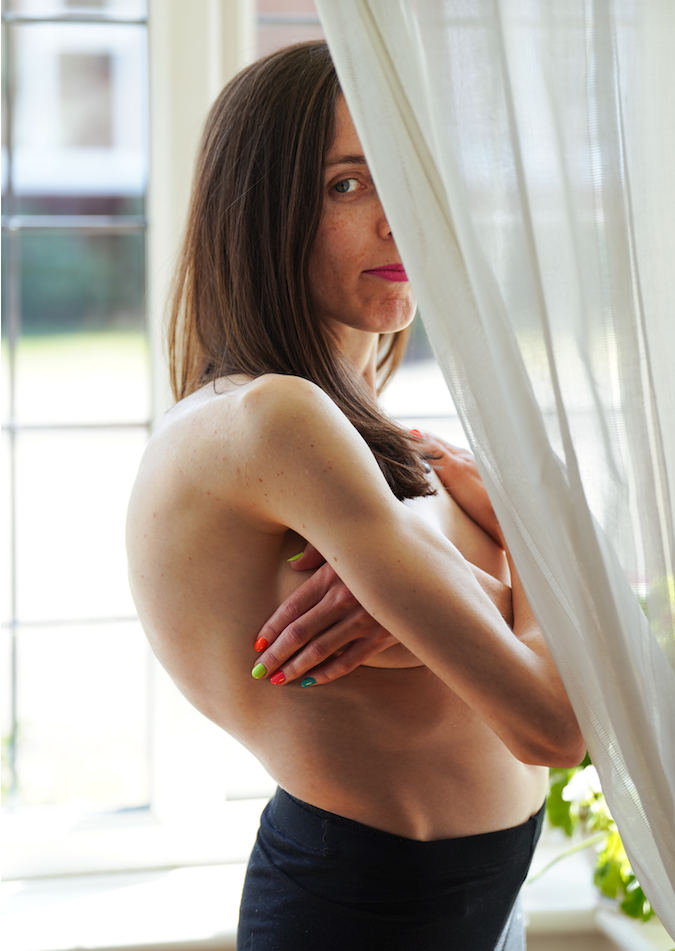 Developed over several years, the project began as a personal exploration of Jones’ own experiences of growing up with scoliosis, spinal fusion surgery and body image, before expanding into a wider investigation into how women’s bodies are understood, represented and cared for within social and medical systems. The work also reflects on the cultural forces that shape women’s relationships with their bodies, from beauty standards and social media to the lack of research historically centered on female health.
The project has been featured by the BBC and exhibited nationally, including as part of the Royal Photographic Society’s 166th International Photography Exhibition at the Saatchi Gallery. A photobook was published with the support of Grain Projects. The Backbone will continue touring over the coming years, beginning with Glasgow International at Street Level Photoworks in Glasgow, running 5 to 21 June 2026. If you are in Glasgow this month, it is not to be missed.
A Curved Reality (USA)
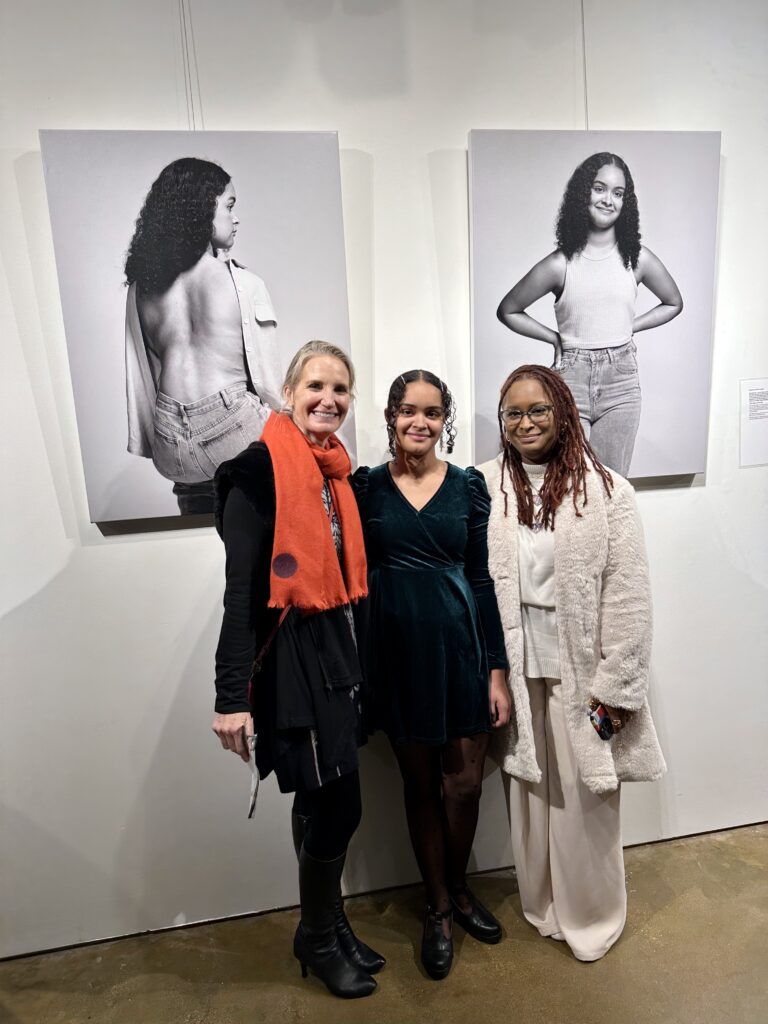
Exhibited at Brown University’s Warren Alpert Medical School in 2024, A Curved Reality by photographer Bilindoff Joseph and nonprofit Back to Healing presented paired portraits of seven scoliosis patients, a formal face-on portrait alongside an image of their unclothed back, accompanied by each person’s story. Patients ranged in age from 11 to 75, and the exhibition was designed not only for public audiences but specifically for medical students, to expand their understanding of what scoliosis means beyond the curve degree on an X-ray.
SPINES: The Art of Scoliosis (USA)
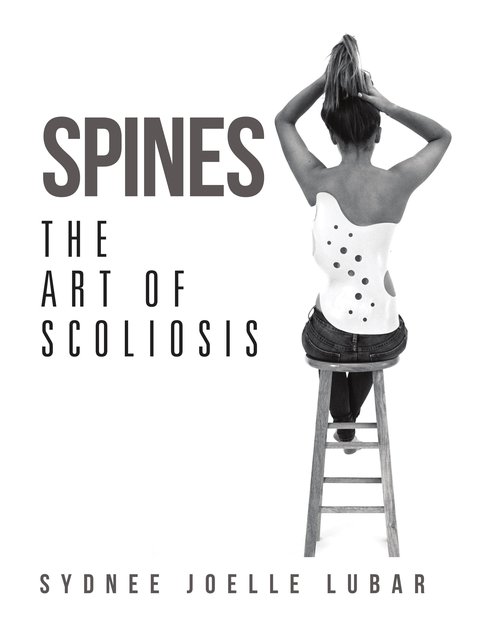
In 2018, 17-year-old Sydnee Lubar, herself a scoliosis patient and brace-wearer since age 12 — published SPINES: The Art of Scoliosis, a black-and-white photography book featuring 28 girls and women across different ages and stages of treatment. From young girls in braces to women with surgical scars, the portraits capture the full generational arc of scoliosis. All proceeds were donated to the National Scoliosis Foundation. Lubar’s stated goal was simple: “To show the power patients can gain in sharing their experiences with others who have a similar diagnosis.”
A Journey Through Scoliosis (Iran/Canada)
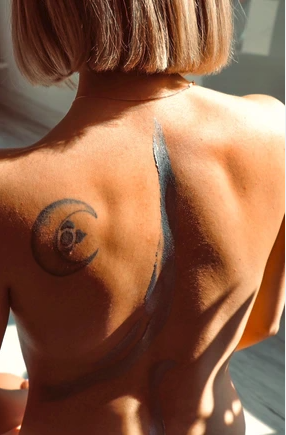
Iranian-Canadian photographer and filmmaker Saghi Ehteshamzadeh, a student at Capilano University in North Vancouver, created A Journey Through Scoliosis after a moment of revelation in front of her bathroom mirror. Having lived with a severe curve for years and struggled with body image and anxiety as a result, she looked at her reflection one day and suddenly saw something different: a curve as beautiful as the bend of a river, the spiral of a flower, the shape of a windswept dune.
The resulting photo project, exhibited at the Penticton Art Gallery, invites people with scoliosis to share their mental journeys alongside their physical ones, and is described by Ehteshamzadeh as “an invitation through art for all scoliosis bodies to embrace their curves.”
Fiction for Young Readers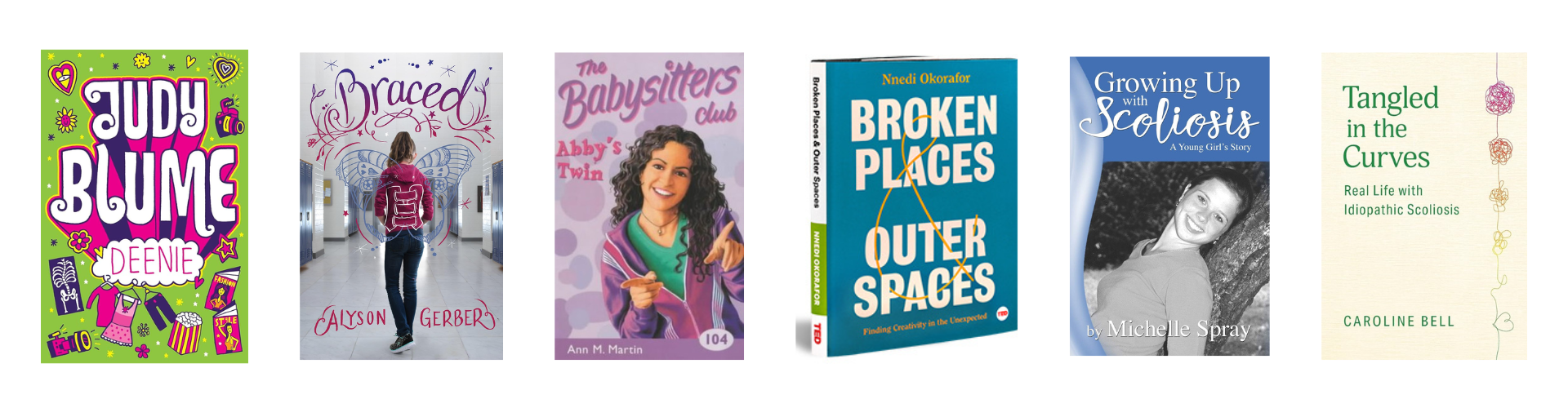
Deenie by Judy Blume (USA, 1973)
One of the earliest and most enduring works of fiction to center on scoliosis, Deenie follows a seventh-grade girl whose mother imagines her future as a model, until a scoliosis diagnosis and years of bracing reshape her sense of herself and her place in the world. Now over 50 years old, this novel continues to be recommended by scoliosis organizations worldwide for its honest, empathetic portrayal of adolescence and diagnosis.
Braced by Alyson Gerber (USA, 2017)
Written by an author with scoliosis herself, Braced follows 12-year-old Rachel, who is told she must wear a back brace for 23 hours a day just as life seems to be falling into place. The novel captures both the practicalities — how clothes fit, how sports change — and the deeper question of identity: who am I when my body becomes visible in a way I didn’t choose?
Abby’s Twin by Ann M. Martin (USA, Babysitters Club series)
Part of the beloved Babysitters Club series, this book gently introduces younger readers to what it means to support someone close to you through a scoliosis diagnosis — told through the lens of twin sisters navigating treatment and independence.
Memoir & Personal Narrative
Broken Places and Outer Spaces by Nnedi Okorafor (Nigeria/USA)
Science fiction writer Nnedi Okorafor, then a college track star, woke up from spinal fusion surgery paralyzed from the waist down — a rare but known complication from which she eventually recovered. Confined to a hospital bed, she began writing the stories she had been hallucinating during her illness. This memoir is about how something breaking — physically, existentially — can become the beginning of an unexpected creative life.
Growing Up with Scoliosis by Michelle Spray (USA)
Spray’s memoir traces the full arc of growing up with scoliosis: from fifth-grade screening through years of progressively intense bracing to spinal fusion surgery. Written with unusual candor, the book covers “nearly every procedure used in scoliosis treatment” and remains a widely recommended resource for families navigating diagnosis.
Tangled in the Curves by Caroline Bell (Canada)
Tangled in the Curves traces the author’s journey from diagnosis at 15 through bracing and spinal fusion at 17, and keeps going into adulthood. More than a straight memoir, it weaves in the experiences of scoliosis patients from around the world, filling the emotional and social gaps that medical explanations so often leave out. Honest, practical, and frequently funny, it reads less like a book and more like the friend who’s already been through it all.
Cultural & Global Perspectives: Scoliosis Across the World
Scoliosis exists in every country. But the way it is understood, treated, approached, and the stories told about it, vary enormously across cultures and contexts.
Ancient Greece: Naming the Curve
The word scoliosis comes from ancient Greek, σκολίωσις (skoliosis), meaning crookedness. Hippocrates was the first to describe it clinically and to develop methods of treatment, including traction boards and spinal manipulation. He classified diseases of the spine into five groups and wrote in depth about their causes and management. Galen, five centuries later, expanded on this work, and his writings influenced medical practice on spinal deformities for over 1,500 years. The ancient Greeks did not just name scoliosis; they took it seriously as a medical challenge worth understanding.
Medieval England: Richard III
The discovery and forensic analysis of Richard III’s skeleton in a Leicester car park in 2012 confirmed what historians had long debated: England’s last Plantagenet king had scoliosis, a right-sided thoracic curve estimated at 65–85 degrees. For most of his reign, this was not widely acknowledged in portraits or official records. It was his enemies, particularly in the later years, who weaponized his difference, most famously Shakespeare, whose Richard III transformed the scoliosis into a theatrical emblem of moral corruption and villainy. The play has shaped how scoliosis has been seen, or rather, misunderstood, for over four centuries.
The Ethiopian Context
The Scoliosis Project, founded by a student at Singapore American School, drew global attention to the particular burden of spinal deformity in Ethiopia, where a convergence of genetic factors, persistent tuberculosis, and residual polio damage creates a disproportionate prevalence of severe spinal curves, often in very young children. In a context of poverty and limited healthcare infrastructure, many of these children reach adulthood without access to treatment. The project aims to fund spinal fusion surgery for families who cannot afford it, a reminder that scoliosis care remains deeply unequal across the world.
Contemporary UK: Living with Scoliosis (2025)
Released in October 2025 by Scoliosis Support & Research (SSR) and premiered at London’s Playground Theatre, Living with Scoliosis is a short documentary following five individuals, each at a different stage of life and each managing scoliosis differently. Directed by Georgia Kelly, it is available on the SSR YouTube channel and is being used as an education tool in schools and healthcare settings across the UK, a reminder that storytelling about scoliosis is not only historical, but urgently contemporary.
A Universal Language
From the tombs of Saqqara to the galleries of Brown University; from the canvases of Mexico City to the photography studios of Vancouver, scoliosis has left its mark on the art and stories of the world. What strikes us most, in surveying all of these works, is how rarely they are about the curve itself. They are about the person inside the curve: their resilience, their creativity, their refusal to be reduced to a diagnosis.
That is the spirit Scolio-Pilates® carries into every session, every module, every practitioner training. We don’t see a curve. We see the person moving through it.