Living with scoliosis has its challenges. Some are physical, some are mental. But there’s a whole other category we don’t talk about enough: the quirks. The little “wait, is that normal?” moments, and even a few things we can do effortlessly because of our curves.
So let’s take a closer look, some are well known, others are not. Do any of these ring true for you?
The spinning skirt
You put your skirt on straight. You walk to the kitchen. The zipper is now on your hip. By lunchtime it has done a full lap.
When your waist curves in more on one side than the other, waistbands don’t have an even surface to grip, so skirts and high-waisted pants rotate as you move. You are not imagining it, and you are definitely not alone. A belt helps, and so does making peace with the mid-morning skirt readjustment ritual.
The strap that will not stay put
Tank tops, bras, dresses, purses. If it has a strap, it’s falling. You can adjust it a hundred times a day, and gravity keeps calling it right back down.
Here’s why: with scoliosis, one shoulder often sits lower than the other, so straps on that side simply have less to hold onto. A few things that help:
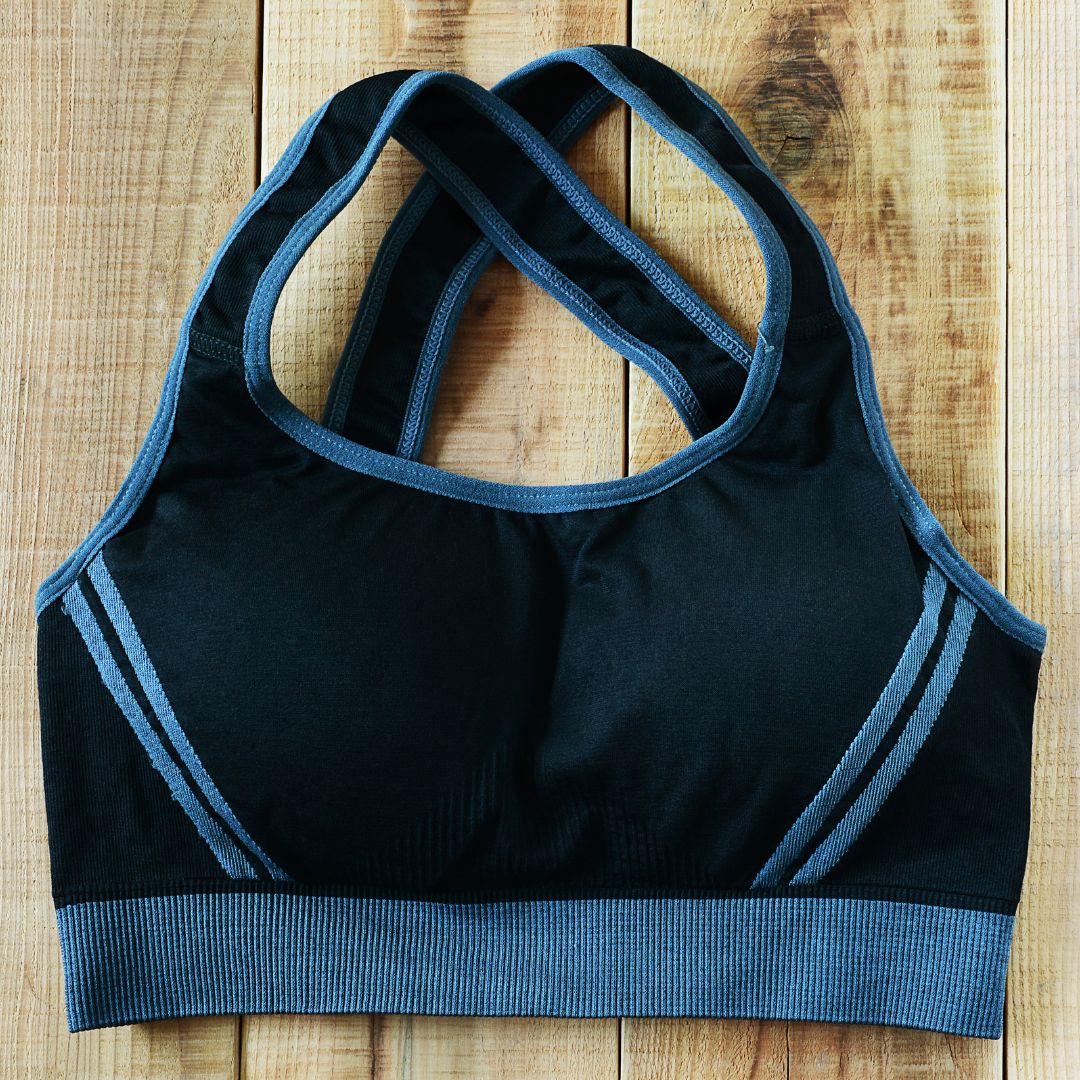
- Choose bras with adjustable straps and skip wide-set styles
- Racerbacks and close-set backs stay put far better
- Or lean in and rock the one-shoulder top. Problem solved, fashion statement made.
Let’s talk about boobs
Yes, we’re going there. If you have any rotation in your torso, you’ve probably looked in the mirror and thought one side was bigger than the other. Maybe you’ve perfected the “scoop and adjust” to get everything sitting right in your bra.
Here’s the good news: they’re almost certainly the same size. Rotation in your thoracic spine means they don’t start and end at the same place on your body. It’s geometry, not asymmetry.
The one good side
Every scoli knows their side. The sleeping side. The side where everything settles and the night actually feels restful. Roll onto the other side and your body files a complaint within minutes.
Your spine has its own idea of “neutral,” and it is very opinionated about it. Honor the good side, use a pillow between your knees, and know that others are out here rotating their mattresses in solidarity. The most important thing is your sleep!

The reaching arm
Top shelf? You’ve got this. But only with that arm.
Every scoli has a designated reaching arm, and it’s no accident. The arm on the convex side of your curve travels higher with less effort, while the concave side is the side that comes in, so reaching with it never feels quite as generous.
Now, a little honesty from the Scolio-Pilates® side of things: extending the convex side isn’t usually what we’re after. Our work focuses on elongating the concavities, not stretching what’s already stretched. But grabbing the peanut butter off the top shelf in two seconds? Go ahead and let the convex arm do its thing. We won’t tell.
The confidant effect
Do people tend to open up to you? Have you been told you seem especially compassionate or easy to talk to?
Many of us with scoliosis carry a naturally tilted, “sympathetic” head position. It’s not something we choose; it’s simply where our spine feels most at rest. But to the people around us, that gentle head tilt can read as warmth and attentiveness. Consider it a built-in superpower for listening.
The haircut struggle
“Can you straighten your head for me?” You did. This is straight.
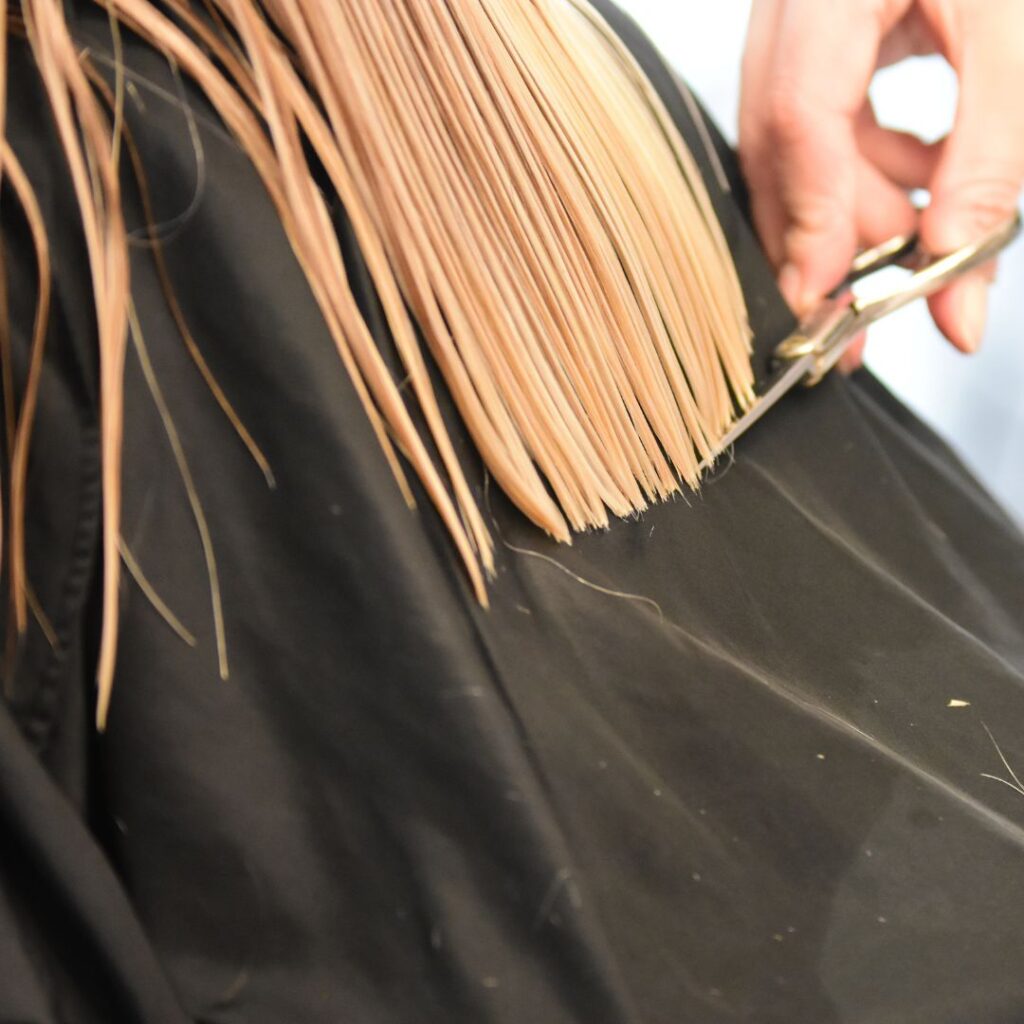
Every scoli knows the salon chair standoff. The hairdresser gently tilts your head back to center, you hold it there with all your might, and thirty seconds later your spine quietly pulls it right back to its favorite spot. Cutting a level line on a head that lives at a tilt is a true collaboration.
Pro tip: tell your stylist about your scoliosis up front. A good one will cut to how you naturally carry your head, because that’s how the world sees your hair anyway. And if one side always looks slightly longer in the mirror, now you know why.
Bendy, anyone?
Some (not all) scolis are remarkably flexible, stretching a leg sky-high without so much as a wince. If that’s you, you may have joint hypermobility, where certain joints move well beyond the typical range.
There’s science behind this one: a study of children with idiopathic scoliosis found that joint hypermobility was significantly more common in kids with scoliosis than in their peers.
The supermodel stance
Ever flipped through a fashion magazine and thought the poses looked… familiar? Torso shifted one way, hips the other, held perfectly still for ages. Models work hard to create and hold that compensation. For many of us, it’s just Tuesday.
And some supermodels genuinely know the feeling. Joan Smalls and Martha Hunt have both been open about living with scoliosis. After her surgery, Martha Hunt made it her mission to spotlight scoliosis awareness and founded Inégal, which donates 100% of its profits to scoliosis research.
Scoli-radar
Once you have scoliosis, you can spot it anywhere. A shoulder blade in the grocery store line. A waistline at the beach. A head tilt across a crowded room. You clock it in two seconds flat, and you feel an instant, silent kinship with a complete stranger.
Call it scoli-radar. It never turns off, and honestly, we wouldn’t want it to.
Flaunt your quirks
So the next time you catch yourself wondering about your quirks, channel your inner supermodel: throw on a one-shoulder top, wear that fresh haircut at your signature tilt, and let your skirt spin where it may.
Your quirks, your scars, your beautifully imperfect perfections are what make you you. Be proud of them. Flaunt them.
Bendy, Beautiful… and a Bit Too Flexible?
If you read “Bendy, anyone?” above and thought that’s me, this one’s for you.
Being the flexible one has its perks. You were the star of every stretching circle, the envy of every yoga class, the kid who could fold herself into a suitcase. And research backs up what you’ve probably suspected: joint hypermobility shows up significantly more often in people with idiopathic scoliosis than in the general population.
But here’s the conversation nobody had with you in that yoga class: if you have scoliosis and hypermobility, more stretching is almost never what your spine needs.
Think about it. Your joints already move beyond the typical range. Your curve already has a stretched-out side (hello, sand dunes) and a compressed side (those tide pools). Pour more flexibility on top of that and you’re feeding the imbalance, asking already-loose structures to hold up a spine that’s craving the opposite: stability, strength, and control.
That’s why at Scolio-Pilates® you’ll hear us say it again and again: we don’t stretch what’s already stretched. We elongate the concavities, we strengthen into the correction, and we teach the body to hold its length, not just visit it.
So if you’re bendy: wonderful. You have range most people would love. Now let’s give you the strength to own it.
We dive deep into exactly this in our Pilates & Hypermobility Webinar: how to recognize hypermobility, what it means for your curve, and how to train control without giving up an ounce of what makes you bendy and beautiful, or find a Scolio-Pilates® practitioner near you for hands-on help.